
Process
Clarify the project early, reduce trial-and-error later.
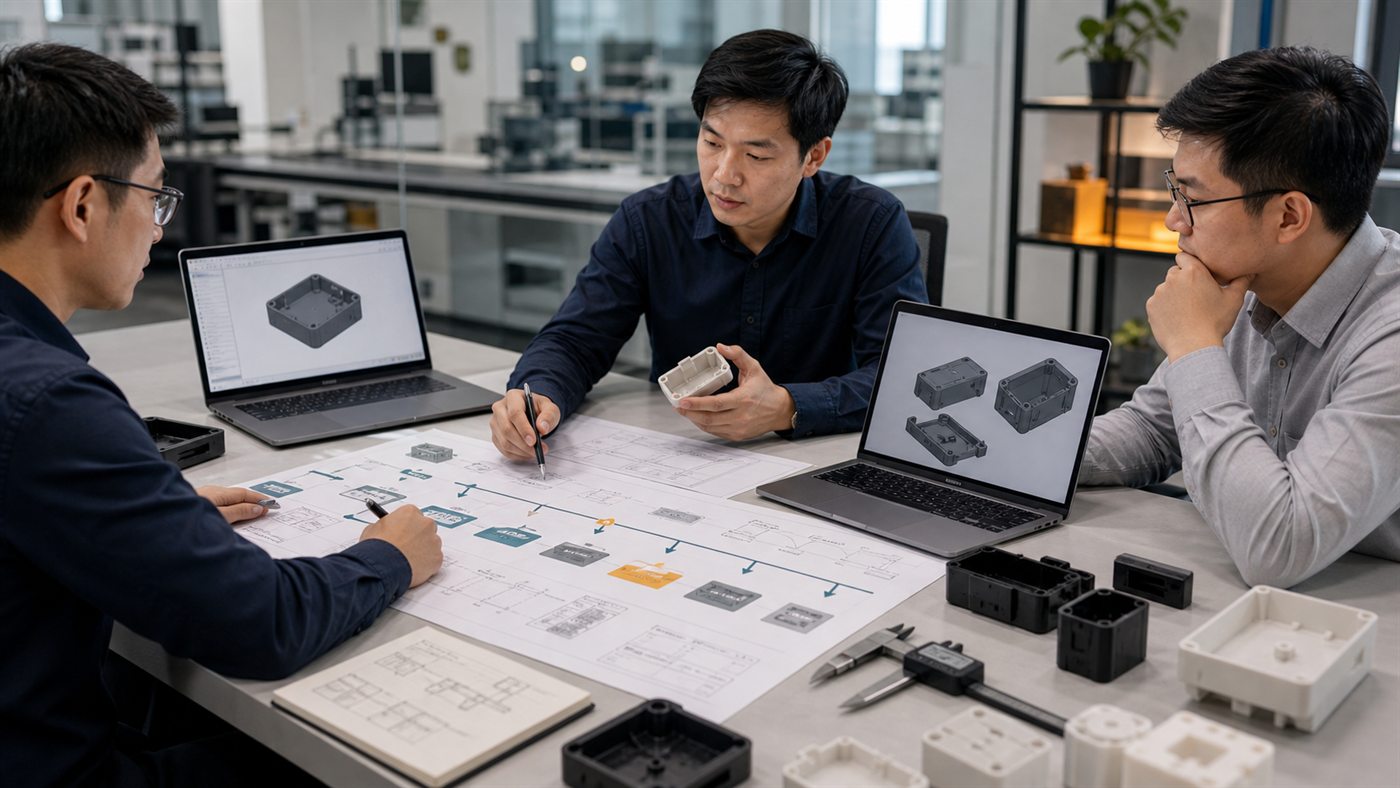
We divide manufacturing projects into confirmable stages: define files and goals first, close structure, tooling and production risks, then move toward stable delivery.
Define files and goals first,
close key risks,
then move toward stable delivery.
Engineering Flow
Break project progress into engineering nodes that can be judged and traced.Clear engineering nodes,
traceable risks.
The point of the process is not to list steps, but to make each step answer three questions: are inputs complete, are risks closed, and can outputs support the next stage?
Each step confirms inputs, risks and outputs.
Confirm the project boundary first
Drawings, samples, quantity, requirements, use environment, appearance target and cost target are collected first.
Judge whether it can be manufactured steadily
Review wall thickness, demolding, shrinkage, strength, assembly and tooling implementation.
Reduce uncertainty early
Use 3D printing, mold flow analysis, structural simulation or local structure adjustment to verify key risks.
Move into tooling plan and trial mold
Confirm parting, gate, venting, cooling and ejection plan, then record mold correction points after trial.
Deliver by dimension, appearance and assembly
During pilot or production, track dimensional consistency, appearance stability and delivery rhythm.
Flow Charts
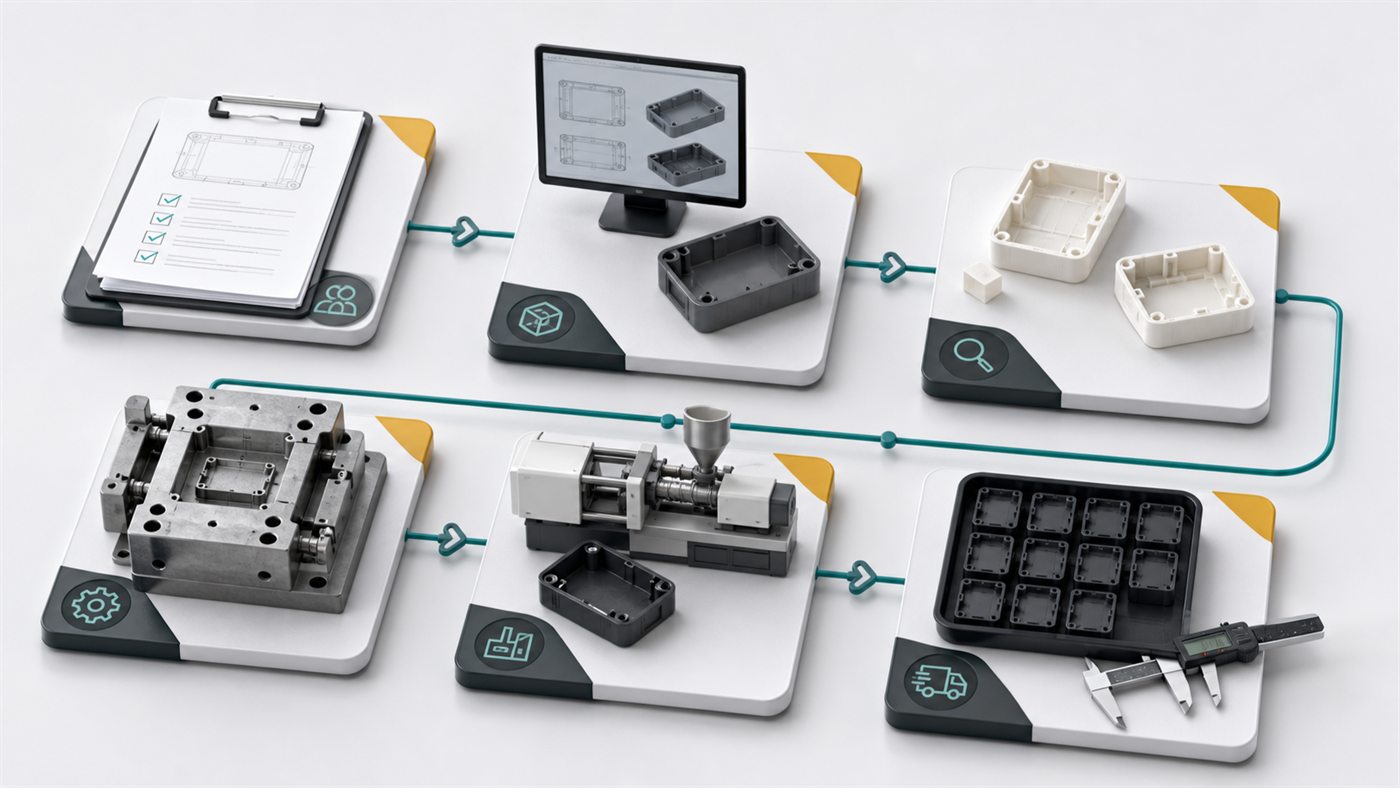
Use flow charts to show inputs, judgment, correction and delivery.
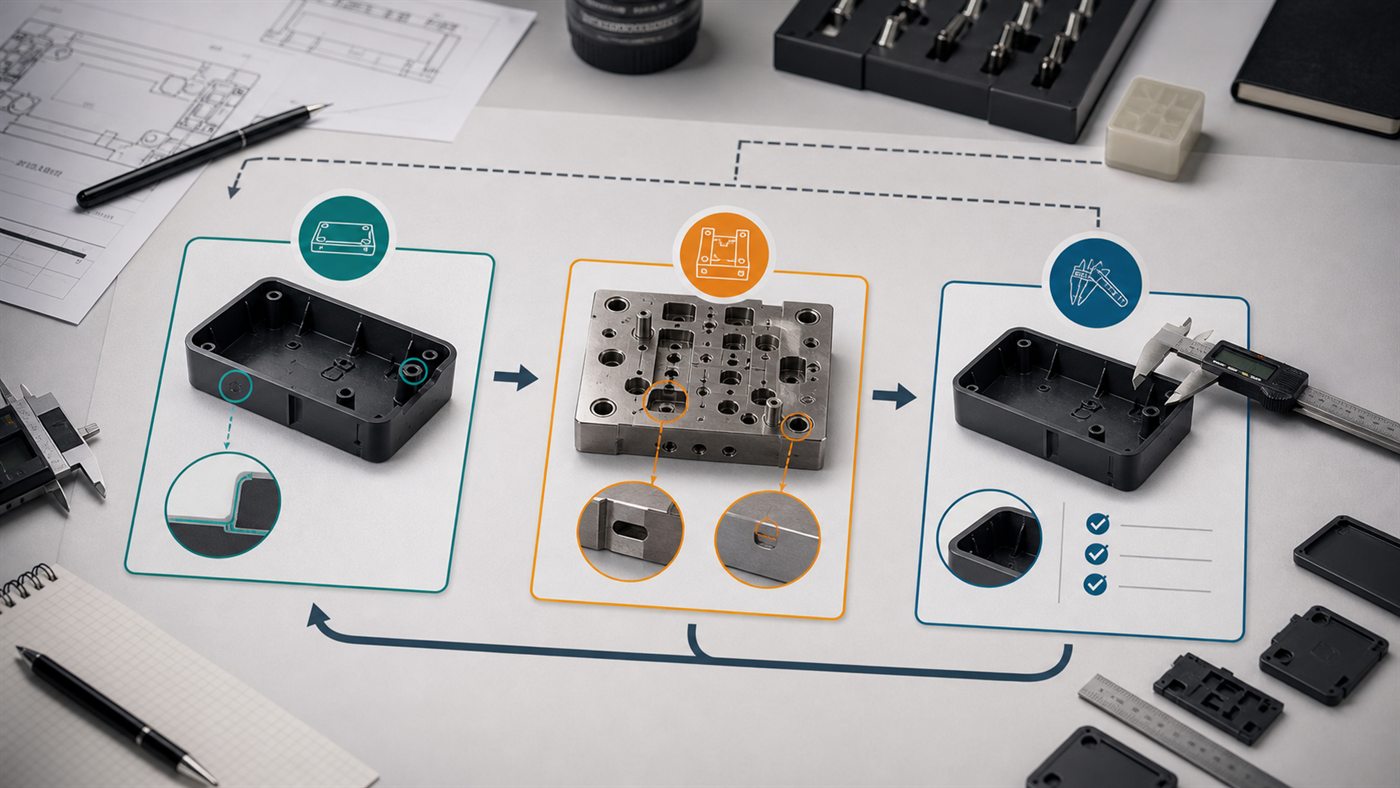
Process management reduces repeated communication: collect files first, judge engineering issues, return to the related step when risks are not closed, and enter tooling and injection delivery after confirmation.
Main Path
Main flow: confirm first, validate, then deliver.
Risk Loop
Risk loop: do not enter the next stage until issues are closed.
Deliverables
Stage outputs make the next step grounded.
Requirement Input
Drawings, samples, quantity, requirements, use environment, appearance target and cost target are collected first.
Engineering Review
Review wall thickness, demolding, shrinkage, strength, assembly and tooling implementation.
Validation
Use 3D printing, mold flow analysis, structural simulation or local structure adjustment to verify key risks.
Mold Development
Confirm parting, gate, venting, cooling and ejection plan, then record mold correction points after trial.
Injection Delivery
During pilot or production, track dimensional consistency, appearance stability and delivery rhythm.
Before Quote