
Judge whether the filling path and gate plan can support the part.
Mold Flow Analysis
Mold flow analysis moves injection risks before tooling.
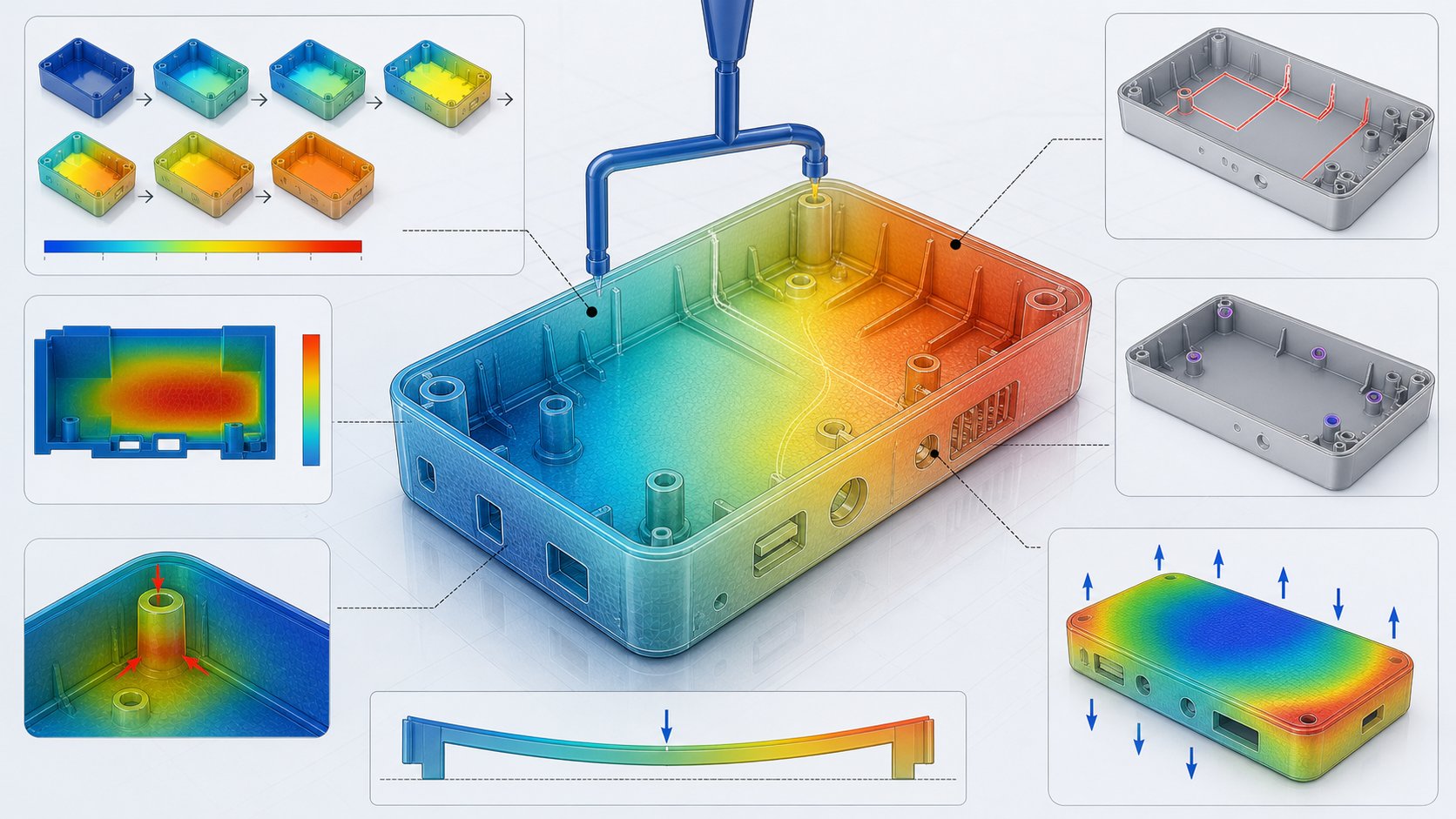
We review filling, gate position, weld line, air trap, pressure trend, shrinkage and deformation risk before mold development.
Risk Review
We first identify the risks that may affect tooling and production.
Identify areas where flow fronts meet and may affect appearance or strength.
Find trapped-air zones that need venting or structure adjustment.
Review shrinkage, cooling and structural imbalance.
Engineering Path
Mold flow analysis helps turn trial-mold problems into pre-tooling decisions.
01Requirement review
Confirm drawings, samples, size, quantity, use environment and target cost.
02Structure judgment
Check wall thickness, draft, undercuts, ribs, bosses, assembly and appearance surfaces.
03Validation and optimization
Use prototype, mold flow review or structural review when the risk is unclear.
04Tooling and production
Move into mold plan, trial mold, correction, pilot run and delivery tracking.
Engineering Judgment
Use filling and pressure trends to support gate, venting and cooling decisions.
Pre-tooling review of filling, shrinkage, deformation, air traps, weld lines, gates, cooling, and structure.
Method
Use filling and pressure trends to support gate, venting and cooling decisions.
Input
Drawings, 3D files, samples, photos, quantity and use requirements.
Review
Evaluate structure, tooling, molding, assembly and possible weak areas.
Output
Provide actionable suggestions for structure, mold or process adjustment.
Gallery
Flow, filling and deformation risk review.
Flow, filling and deformation risk review.
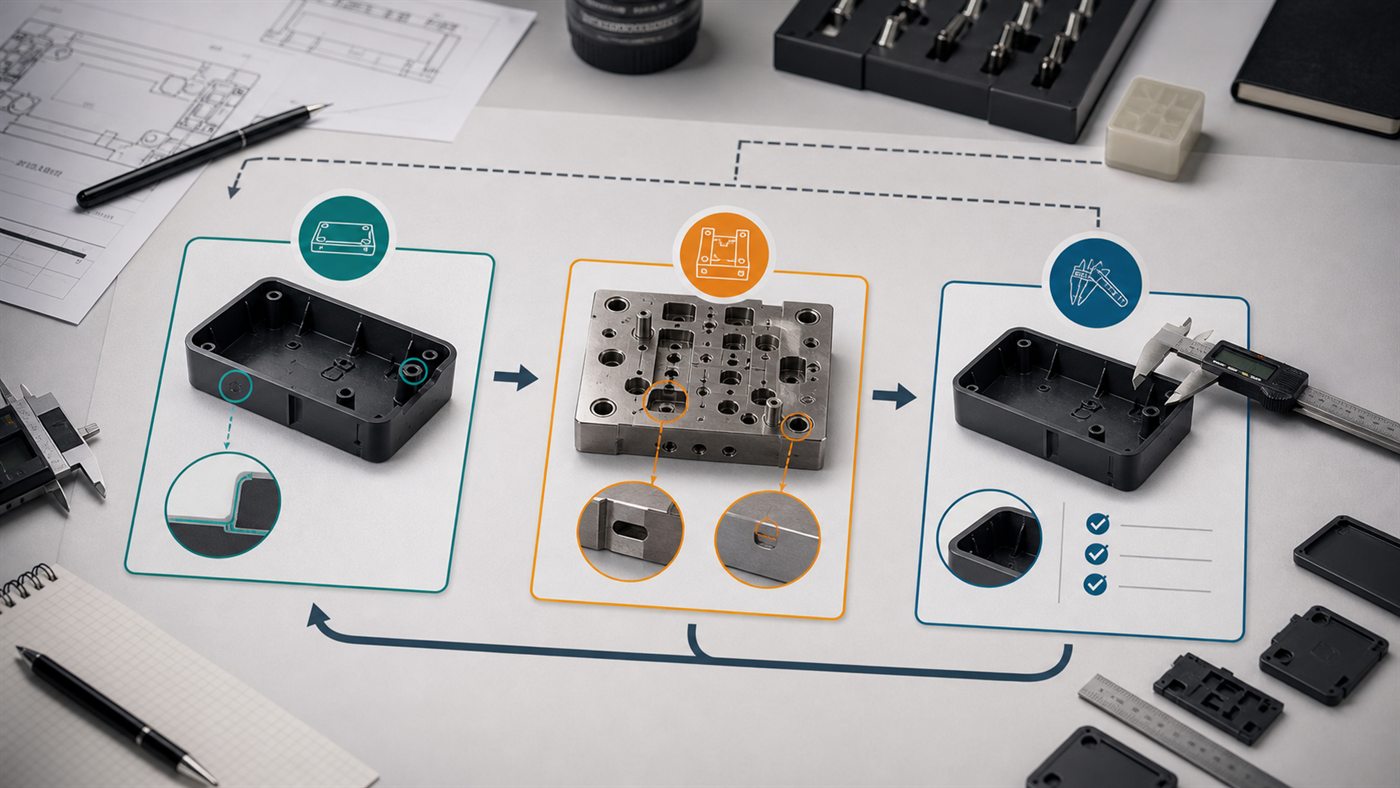
Flow, filling and deformation risk review.
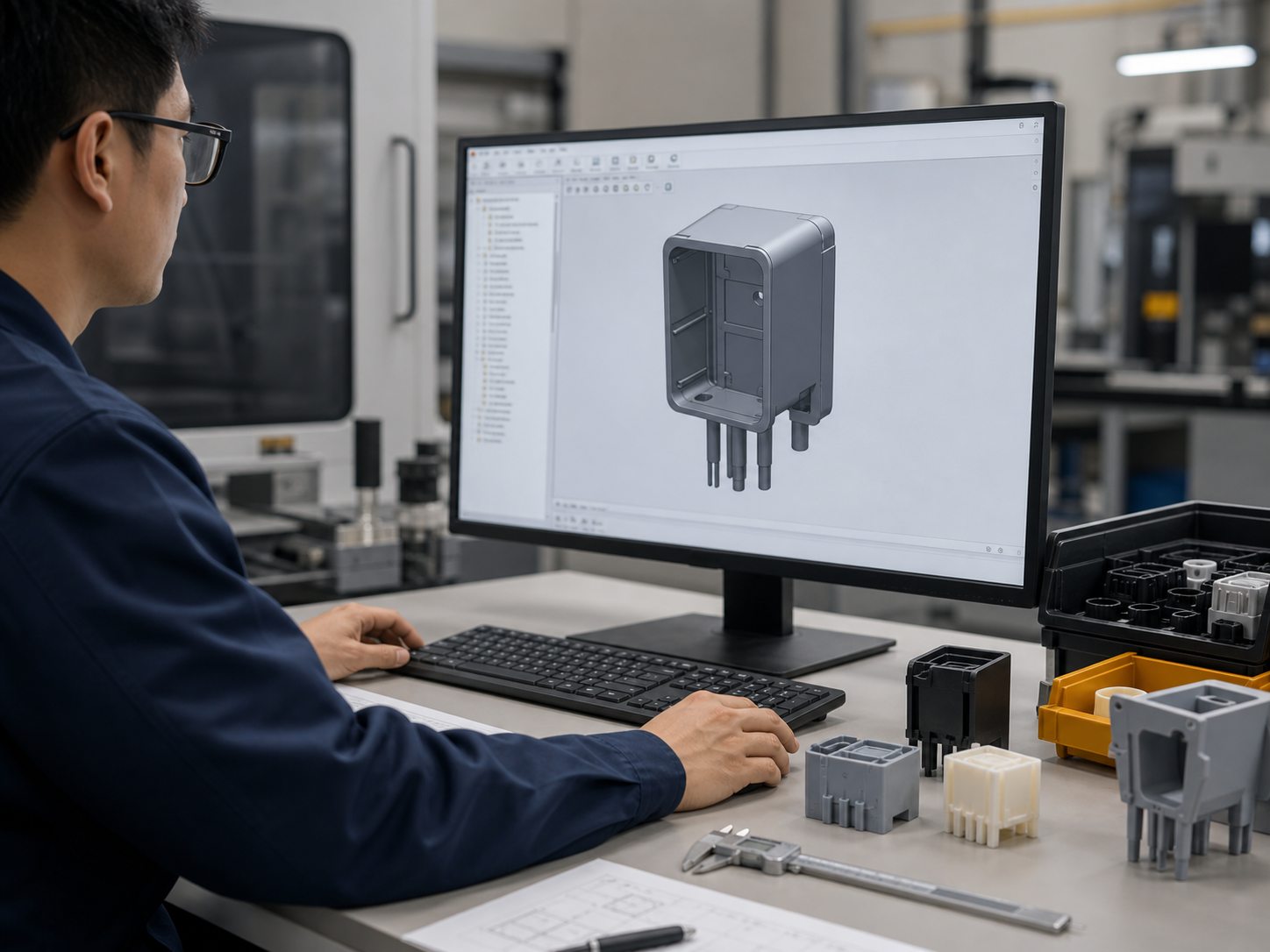
Flow, filling and deformation risk review.
Checklist
Mold flow review checklist.
Review filling path, pressure and temperature trendConfirm before moving to the next engineering step.
Evaluate weld lines, air traps, shrinkage and warpageConfirm before moving to the next engineering step.
Suggest gate, venting, cooling and structure changesConfirm before moving to the next engineering step.
Communication recordKeep key assumptions, changes and acceptance criteria clear.
Inquiry
Have drawings or samples? Send them to us for evaluation.
For a more accurate review, please provide product images, 2D drawings, 3D files, dimensions, part weight, estimated quantity, color, surface requirements, and whether a mold already exists.